Hey Emma.
My name is Jeff and I go to Hornby High. I am a year 7 this year but next year I will be in year 8. I from China. I really like playing with my best friend at the park. I also enjoy play NERF with my friends too. And my favourite colour is blue. What's your favourite colour?
Over the holidays I will be thinking with my best friend play lots games , but between times I will working on my summer learning Journey and I wold win a prise.
If I can won the summer learning Journey I will want a blue tooth for my dad Birthday present.
Monday, November 26, 2018

Monday, November 19, 2018
Passion project wearable arts
Today we doing passion project I'm very happy to do passion project is very fun ,in the first day we use newspaper make cloth we group make a robot and a ninja is very hard to make.
In the second day at passion project we go to the junk buy some make our cloth important things and we came bake make our cloth and make a ninja this ninja is better then we make before we make. And in third day we doing our ninja cloth again.
In the forth day is today we doing jute and doing our staff again I think we don't need do very hard for the cloth , I think we just take the part.
SLJ Japan
Today we doing cybersmart , we learning about summer learning when you going to the holidays and we doing some blog about you chose a country and write about this country. I chose Japan , now I tell you about Japan.
Japan
Japan is a country in the Pacific ocean made up of 6852 islands. The four largest islands are called: Honshu, Hokkaido, Kyushu and Shikoku. Japan is located to the east of Russia, China and Korea.
Population Size of Japan 2018:
127,1 million people
Main Cities
Tokyo (Capital), Kyoto, Hiroshima, Sendai, Osaka
Climate
The climate in Japan is mostly temperate, however, it does vary from north to south with colder temperatures (including snow) found in the north.
Public Holidays
- Showa Day (April 29)
- Constitution Memorial Day (May 3)
- Greenery Day (May 4)
- Children's Day (May 5)
- Marine Day (third Monday of July)
- Mountain Day (August 11)
- Respect for the Aged Day (third Monday of September)
- Autumnal Equinox Day (September 22 or 23)
Japan

Languages
There is one official language in Japan - Japanese.
Ethnic Mix
Japanese, Korean, Chinese, Filipino, Brazilian, Vietnamese, Other
Money (Currency)
Yen [JPY]
National Sports
Sumo wrestling, baseball, football (soccer), judo, karate, kendo
National Icons
1. The cherry blossom tree, 2. The koi fish, 3. The red-crowned crane (bird), 4. The lychee fruit
Friday, September 21, 2018
Alchemy
Alchemy
Today we did Alchemy experiment it was amazing, because the colour of the coin was changed.It's very cool I like it.


Alchemy 21 September 2018
Aim:
I want to find out how to turn a copper coin into gold.
Equipment:
- Copper coin
- Bunsen burner
- Tripod
- Heat mat
- Gauze mat
- 50ml beaker
- Scissor tongs
- Zinc metal
- Zinc Nitrate solution
Method:
- Put your safety glasses on.
- Set up heating equipment.
- Add 50ml of Zinc Nitrate to the beaker.
- Add the strips of zinc metal into the solution.
- Heat the beaker with a blue flame.
- Once the solution is boiling, add the Copper coin on top of the Zinc.
- Wait for 10mins.
- Using scissor tongs, get the coin and wash it under water.
- Still holding the coin with the scissor tongs, hold the coin in the blue flame.
Wednesday, September 19, 2018
Orana park
Orana park
Yesterday we went to the Orana park learn and see the interesting animals that's my first time went to the zoo.
We went to the Orana park see the Kiwi, Spider monkeys, Giraffe, Rhino, lions, Cheetah, Zebras, Tigers, Tasmanian......
KIWI:
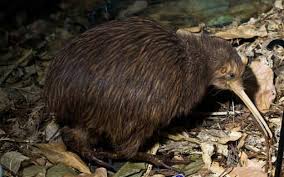
Kiwi have strong legs to kick predators. They're legs aren't hollow like birds who fly. Kiwi only eat insects that are alive. Kiwi carry their egg for 28 days. At 6 weeks old kiwi chicks leave their mum. Female kiwi are larger to carry the eggs.They have no tail and their wings are under-developed.
Spider monkeys:

Spider monkeys have a thumb print on the end of their tail.They use their tail for balance.
Yesterday we went to the Orana park learn and see the interesting animals that's my first time went to the zoo.
We went to the Orana park see the Kiwi, Spider monkeys, Giraffe, Rhino, lions, Cheetah, Zebras, Tigers, Tasmanian......
KIWI:
Kiwi have strong legs to kick predators. They're legs aren't hollow like birds who fly. Kiwi only eat insects that are alive. Kiwi carry their egg for 28 days. At 6 weeks old kiwi chicks leave their mum. Female kiwi are larger to carry the eggs.They have no tail and their wings are under-developed.
Spider monkeys:
Spider monkeys have a thumb print on the end of their tail.They use their tail for balance.
Friday, September 14, 2018
Ice experiment
Today we make Ice Cold. We have ice cube,salt,bowl and matches. First we have a bowl of cold water and put the ice in the cold water, and take matches put ice and matches together .If the ice and matches together is finish, if not together is not finish you must do again. Is fun I like it.
Ice Cold
You will need;
- A bowl of cold water
- A matchstick
- An ice cube
- Table salt
Instructions:
- Place the ice cube carefully in the bowl of cold water
- Gently place the match lengthwise on top of the ice and try to lift the ice cube
- Put the matchstick back on the ice and sprinkle a little salt along the line where it touches the ice cube
- Wait for 30 seconds and then attempt to pick up the ice cube again
What’s the science?
At first the ice cube and water are in equilibrium meaning that the rate of freezing and melting is the same.
The salt lowers the rate at which the water freezes, so the ice melts faster.
This releases lots of energy in the form of heat, so everything gets colder, including the ice cube. Where there’s no salt (under the match) the ice cube refreezes, freezing the match in place.
Extra for experts:
Why do we sprinkle salt on icy roads? So the ice melts faster.
Friday, September 7, 2018
Elephant's Toothpaste
This week Friday in science we learnt to make Elephant’s Toothpaste
Like that ( under here ). It was fun!


Elephant’s Toothpaste 7.9.2018
Resources:
- Safety glasses
- A cylinder
- Rubber gloves
- A tote tray to protect the bench from damage
- 120ml Hydrogen Peroxide 6%
- Dishwash liquid
- Dry yeast
- Food colouring
- Funnel
- Tablespoon
- Beaker
Procedure:
- Put on your gloves and goggles.
- Put a tote tray on the bench and put your cylinder in the tote tray, with the funnel in the top.
- Ask the teacher to pour the hydrogen peroxide into your cylinder (via the funnel).
- Add 10 drops of food colouring to the cylinder (via the funnel).
- Add a tablespoon of dishwash liquid to the bottle (via the funnel).
- Swirl your cylinder around to mix everything together.
- In a beaker, mix a tablespoon of dry yeast with 3 tablespoons of warm water and stir for 30 seconds.
- Pour the yeast mixture into the cylinder (via the funnel).
- Stand back and watch the chemical reaction!
- Pour the mixture down the drain afterwards and wash out the cylinder.
Scientific Explanation (How it works):
The yeast and water mixture acts as a catalyst - something that speeds up a chemical reaction in another substance, while remaining unchanged itself. When you add this to the cylinder it makes the hydrogen peroxide break down into oxygen and water. The dishwashing liquid traps the oxygen in bubbles to create the foam. Just a small amount of hydrogen peroxide will create a lot of oxygen, so you get loads of bubbles - making your ‘toothpaste’ almost explode out of the cylinder.
Extra for experts:
- Is your cylinder warm after the experiment? Why?
- warm.
- Your experiment created a reaction called an Exothermic Reaction - that means it not only created foam, it created heat.
Subscribe to:
Posts (Atom)